
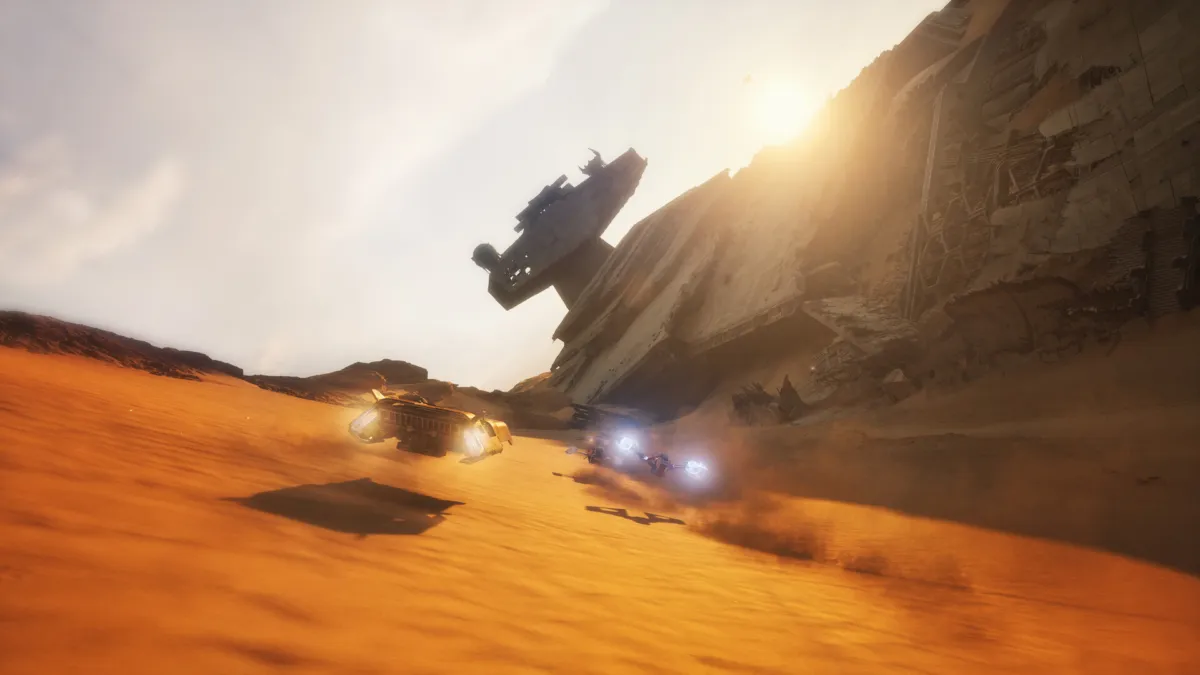
Lucasfilm Games has spent the last two years quietly opening the door to smaller studios, and it is now saying so on the record. In an interview with The Game Business‘s Christopher Dring, Lucasfilm Games VP Douglas Reilly said the publisher has “tried to be more flexible” about who it takes Star Wars pitches from, and that you no longer need “a top five publisher” to make a great Star Wars game.
“We’re exploring all kinds of things, from very large partners to smaller ones,” Reilly said, per TheGamer and GamesRadar+. “There’s a level of quality expectation, but [Lucasfilm Games has] also been a little bit less restrictive with the IP, I would say.”
What changed
Reilly pointed to two 2026 releases as proof of the strategy. The first is Star Wars: Zero Company, a single-player turn-based tactics game from Bit Reactor, a small Baltimore studio founded by former Firaxis XCOM developers. Bit Reactor has fewer than 30 people on staff. Zero Company released August 27, 2026 via Electronic Arts, a far cry from the multi-thousand-person teams behind Respawn’s Jedi series, but the game emerged as a surprise Game of the Year frontrunner in its category.
The second is Star Wars: Galactic Racer, a runs-based Outer Rim racer from indie studio Fuse Games published by Secret Mode. It launched October 6, 2026 to a Very Positive Steam reception with 5,385 reviews. Galactic Racer was a Pixel Herald Play This Weekend pick on launch weekend and debuted at No. 2 in our weekly What’s Selling roundup. A roguelike-inspired racer set after the Empire fell, it is a focused, single-run experience that bigger Star Wars studios rarely ship.
What this means for players
The practical upshot: smaller studios with strong pitches now have a real shot at the license, which has historically been reserved for the biggest publishers. Respawn’s Jedi 3 and Quantic Dream’s Star Wars Eclipse are still on the very distant horizon, alongside the long-rumored Knights of the Old Republic remake. The gap is now being filled by Bit Reactor-class teams shipping full games in months rather than years.
For players, this means more Star Wars games in genres the franchise has rarely touched. That includes roguelike racers, retro-style brawlers, Musou, and the focused indie experiences that have historically stayed away from big licenses. The strategy also lets Lucasfilm keep a steady stream of Star Wars releases flowing between the marquee blockbusters. Reilly’s “continue to surprise folks” line is the cue: expect more out-of-left-field pitches to land at Galactic Racer and Zero Company scale studios.
Lucasfilm’s shift mirrors what Marvel Studios has done with its post-Endgame slate. The tentpole films keep coming, but the license is also a launching pad for creators across budgets and genres. The difference is that Star Wars has fewer parallel lanes to fill, so each smaller release carries more weight. Zero Company and Galactic Racer launched to critical momentum within two months of each other, and Lucasfilm has now said publicly that this is the plan. The bigger test will be whether the next wave of smaller Star Wars games can sustain that quality bar, or whether “more flexible” turns into “more crowded,” the recurring risk whenever a big license opens up to more pitches than the editorial team can greenlight at once.
Edited by Kerwin Stewart, Editor-in-Chief · How we report

Comments
Join the discussion What kind of Star Wars game do you want a small studio to make next?
Loading comments…