

Konami president Hideki Hayakawa said in a recent fiscal report that AI won’t have a significant long-term effect on game development, with people and creators remaining the most important factor behind any entertaining or innovative video game. The remarks, made in the company’s most recent fiscal filing and reported today by DualShockers and GamesRadar+, position Konami as one of the few major Japanese publishers publicly pushing back against generative AI in game dev.
Hideki Hayakawa is Konami’s president, heading Konami Group Corporation as of 2024. Generative AI is the class of machine learning models that produce text, images, audio or code from large datasets, the same technology behind ChatGPT and Stable Diffusion. Hayakawa’s full quote: “the most important factors in producing entertaining and innovative video games are people and creators.” He added: “entry barriers have already been lowered by the advancements of generic game engines and the spread of UGC (user-generated content),” arguing that the accessibility concerns often raised around AI are already addressed by off-the-shelf engines and community content tools. Konami is also providing ‘systematic support so that creators can get a grasp of new technologies, properly assess the risks they may bring, and safely apply them to game development,’ he said.
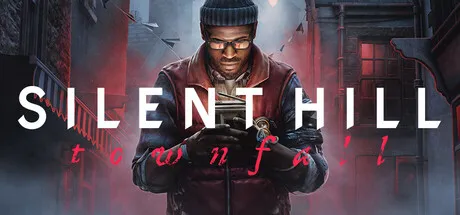
The stance lands as Konami rides one of its strongest years in a generation. Silent Hill: Townfall launched in late September. The second and third waves of new Silent Hill games are already in motion. The recent Metal Gear Solid 3 remake hit PlayStation and Xbox. Castlevania: Belmont’s Curse launched on October 15 to a mixed-positive Steam reception. Konami, of course, has also been criticized historically for how it handled beloved franchises.
Konami joins a small but growing group of Japanese creators publicly skeptical of generative AI in shipping games. Dragon Quest creator Yuji Horii shipped an AI-built detective game, Komiya in the Interrogation Room, on his own earlier in 2026, framed as a one-off experiment rather than a studio pipeline. Across Asia, Black Myth: Zhong Kui developer Game Science explicitly pledged no AI use in development during the project’s promotional run. Studios investing in dedicated art teams for high-profile single-player titles have leaned the same way: people in the room, not a model on a server.
For Western players, Hayakawa’s framing is unusual in two ways. The first is timing: Konami says it out loud while so many Western publishers keep their AI position vague. The second is the specific claim. Hayakawa is not saying AI is bad. He is saying AI is not what lowers entry barriers — a different argument. Lower entry barriers, he says, came from generic engines (Unreal, Unity) and UGC (user-generated content) tooling long before large language models were in scope. UGC is the umbrella term for player-made levels, mods and assets published in-game or in adjacent storefronts. If players care about AI in upcoming Silent Hill or Castlevania games, Hayakawa is effectively pre-announcing that the recent Konami catalog will keep relying on human creative teams for its headlining releases. The exact comparison example is the recent Castlevania: Belmont’s Curse, which shipped on October 15 to a mixed-positive Steam reception and which Konami developed through long-time partner studios rather than AI tooling.
Not yet announced: which specific upcoming Konami releases, if any, will formally commit to no-AI pipelines at the project level.
Edited by Kerwin Stewart, Editor-in-Chief · How we report




Comments
Join the discussion Is Konami's no-AI-in-games stance going to influence which Silent Hill or Metal Gear Solid releases you'll buy?
Loading comments…