
Opinion
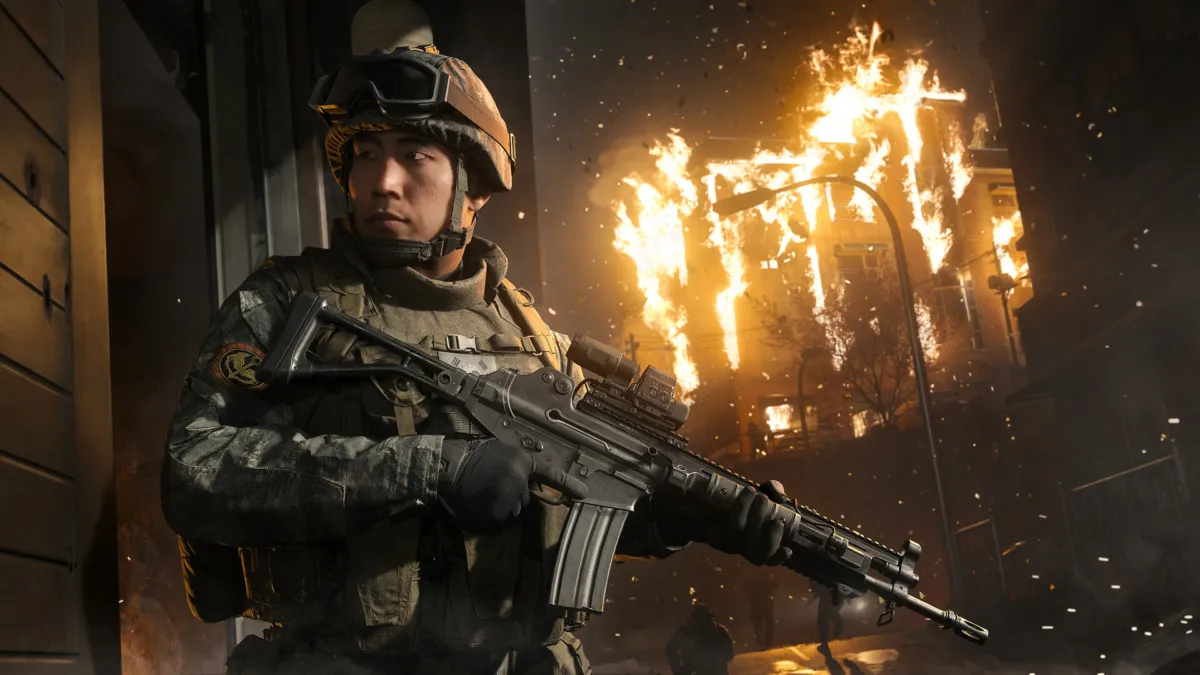
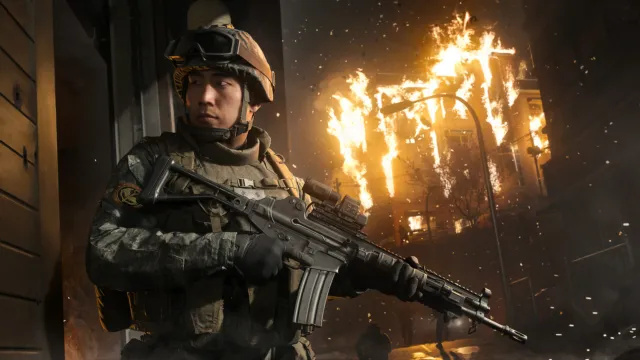
Activision’s central QA testers authorized a strike on the morning of October 15. By the end of the week, every major outlet with a build of Modern Warfare 4 was echoing the same verdict on its campaign. The game is good. The people who finished it are not yet finished being mistreated. They are the same story of 2026 in games.
What happened
On Thursday, October 15, the Communications Workers of America announced that Activision Publishing’s roughly 400 quality assurance testers had voted overwhelmingly to authorize a strike. They are organized through Activision Quality Assurance United-CWA, the CWA union covering central QA at Locals 6215, 7250, and 9400. The vote gives CWA President Claude Cummings Jr. the authority to call a work stoppage at any point during MW4’s launch window, including the global launch on October 23. A strike authorization is not a strike. It is permission to call one. A day later, IGN’s Simon Cardy published the first major campaign review, calling MW4 “the best Modern Warfare has been since its 2019 reboot by quite some distance.”
Activision QA is the largest game-industry QA union in North America and the first to clear the strike-authorization bar. The timing matters: it lands at the highest-profile launch on the calendar, on a game Activision has spent the year marketing as one of its “biggest games,” a phrase that has appeared in investor calls and at the GTA 6-marketing crossover briefing we covered earlier this month. The CWA release framed it pointedly: “Ahead of next week’s Call of Duty: Modern Warfare 4 early access launch, workers at Microsoft-owned Activision Publishing vote to strike if necessary to achieve a fair union contract.”
What they want, in the workers’ own words
The bargaining committee has been at the table with Activision since August 2024, more than two years, on what is supposed to be a first contract. The four open issues are wages, accommodations under the Americans with Disabilities Act, guardrails on AI usage and the use of contractors. Read the union’s release and the dispute is less about greed than about basic recognition that the labor is the work.
“Bargaining has been a long, exhausting process spanning over two years, with our committee making responsible moves while the company continues to stall on critical issues like wages, accommodations, and worker protections,” AQAU-CWA bargaining committee member Emily Danko said in the CWA release. Her colleague Jenna Huffman was sharper: “Activision’s stalling at the bargaining table shows that they are not the high-road, union-neutral employer they once committed themselves to be and are instead aggressively fighting us in bad faith at the table.” CWA District 7 Vice President Susie McAllister closed it: “it is time to stop playing games because our members are united and prepared to do what it takes to win the strong contract they deserve.”
AQAU formed in March 2024 with about 600 testers, one of the first groups organized inside Activision after the Microsoft acquisition. The unit has already shrunk to about 400 through layoffs, a third of the original roster, even as the work has not shrunk with it. Huffman put the daily exposure plainly: “We’re forced to come into work everyday without fair accommodations and we continue to be under constant threat of sweeping layoffs without meaningful protections.”
The other side, given room
Activision’s public reply to Kotaku is short. A spokesperson said the company has been “working in good faith with the CWA for the Central QA team and we have made meaningful progress on a number of issues.” Activision’s goal, the company said, is “a fair first contract that supports our QA team members and the long-term success of the business.” It offered to meet on October 21 and 22. “We respect our employees’ right to engage in protected activity, including the right to strike. We have plans in place to ensure there is no disruption to players or upcoming game releases.”
There are real arguments in that reply’s defense. The company offered two more bargaining sessions right before launch; some employers go silent. Bargaining over AI guardrails in QA, where the technology is genuinely changing month to month, is hard to settle in a five-year contract. Contractors are how every major publisher ramps QA up and down with the launch calendar, a model not unique to Activision. Two years is long but not historically unusual for first contracts in long-organized industries.
None of it explains the contradiction the strike vote is built on: a union organized under a labor neutrality agreement (a pre-hire deal in which the employer agrees not to fight union organizing) that Microsoft signed as part of the Activision acquisition, and that Huffman says has expired. That union has now spent more than two years bargaining without a contract while management still says publicly that it “remain[s] committed to open dialogue.”
What this is and is not arguing
It is not arguing the critics who echoed the early MW4 campaign impressions did anything wrong. Simon Cardy’s “best Modern Warfare since 2019” line is a real assessment of a game Cardy played for roughly seven hours across its 16 missions. Reviewers do not owe a take on labor. They owe a take on the game.
It is also not arguing Activision’s QA testers are trying to “ruin launch day for everyone.” The vote gave the CWA permission to call a strike. It did not call one. The next move is the company’s. A fair offer before October 23, and there is no strike. The same workers who tested MW4 into submission are the ones who want a contract that lets them keep doing it.
What it is arguing is the smaller claim: that the labor story here matters, that reviews and union votes are both real, and that one of them is a lot easier to celebrate than the other.
The bigger picture
The 2020s labor story in games is not really about any one union, but the table shows what is at stake for the wave:
| Union | Year organized | Peak size | First-contract status | Strike authorized? |
|---|---|---|---|---|
| Raven Software QA (Activision Publishing, Wisconsin) | 2022 | ~30 testers | Bargained since | No |
| ZeniMax QA | 2023 | ~300 | Bargained since | No |
| Magic: The Gathering Arena (Wizards of the Coast / CODE-CWA) | 2024 | ~50 | Bargained since | No |
| Activision QA (AQAU-CWA, central QA unit) | March 2024 | ~600, now ~400 | Bargaining 26+ months, no contract | Yes, October 15, 2026 |
Sources: CWA release of October 15, 2026; Pixel Herald reporting.
AQAU-CWA is the largest union in the wave, attached to the highest-profile publisher. If it cannot get a first contract after more than two years, every other union in the wave learns the math does not work at the top of the business. For example, ZeniMax’s QA has been bargaining since 2023 with no agreement; if the union at the publisher with the largest launch cannot close a deal, the precedent at every smaller publisher gets weaker. Raven Software’s first contract took the weight of a public fight; the Activision case is the test of whether weight still matters without a public fight at the very top.
The economic argument the company can make in private is that a central QA first contract at Microsoft-Activision scale would set a wage floor thousands of workers deep. The economic argument the union can make is that 400 testers building the year’s biggest entertainment product are doing so without a contract at all, which is the same problem every union in the wave has. Both arguments are true. The interesting one to watch is whether the October 21 and 22 sessions produce an offer the union can take to its members, or whether the strike vote becomes the answer. Either way, the case is going to be remembered as the one where the game with the best reviews of the year sat a launch window away from a work stoppage, and the two stories on either side of that window were the same story.
Call of Duty: Modern Warfare 4 is, by every indication, the best-received Modern Warfare of the past seven years. Reviews are landing positive. Campaign Early Access is live. The full launch is six days out. Players will have a lot of fun with it.
We should let them have that fun. We should also notice what made it possible, and ask, calmly, why the people who made it possible are still without a contract two and a half years after they organized for one.
Edited by Kerwin Stewart, Editor-in-Chief · How we report

Comments
Join the discussion If you love MW4's campaign, does it change anything to know its QA team has been bargaining for a contract for two and a half years?
Loading comments…