
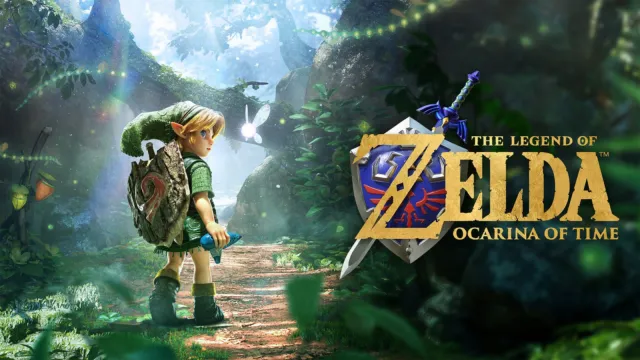
The Legend of Zelda: Ocarina of Time on Switch 2 is the definitive way to play the 1998 classic. It launches with full voice acting, overhauled visuals, a modern camera, and a microphone-driven ocarina system. This guide walks you through what’s new, the essential ocarina songs, beginner tips for the two time periods, and how the Zelda Notes companion app works.
The Switch 2 remake sits in an unusual spot: it’s a from-the-ground-up rebuild by Nintendo EPD (the Breath of the Wild team), not a port or remaster. That means the 24.9 GB file size is roughly double the Switch 2 Editions of Breath of the Wild (13.4 GB) and Tears of the Kingdom (16.3 GB), despite Ocarina of Time being a shorter game. The extra space goes to fully voiced cutscenes, the orchestral score, and the microphone audio processing for the ocarina, features that didn’t exist in 1998 or 2011. For players who already own the 3DS remake, the value proposition hinges on whether voice acting and the Hall of Defeated Foes justify a second purchase at $60. For newcomers, this is the cleanest entry point in 26 years.
What’s new in the Switch 2 remake
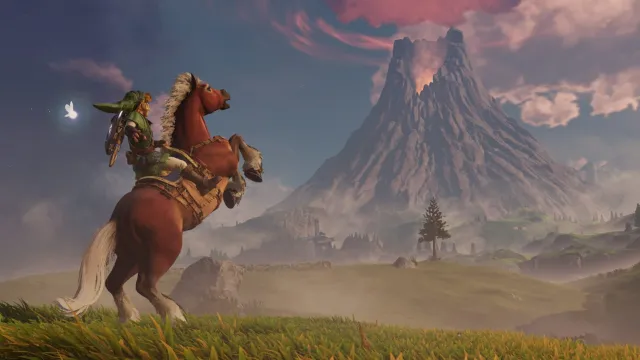
Nintendo EPD rebuilt Ocarina of Time from the ground up for Switch 2. Per Nintendo’s official store page and our launch coverage, the headline changes are:
- Overhauled visuals targeting 1080p60 in TV mode and 720p60 in handheld mode
- Fully orchestral score replacing the original synthesized soundtrack
- Full voice acting for every line of dialogue
- Expanded cutscenes with new camera work
- Modern controls: jump button, dash, full camera control, scrollable item wheel (like Breath of the Wild)
- Microphone ocarina: play songs by humming, singing, or playing an instrument into the Switch 2 microphone
- Threads of Time: an in-game progress tracker and story summary
- Hall of Defeated Foes: replay boss battles and view statues of beaten enemies
- Hyrule Castle Town is now fully explorable (no longer a fixed-camera area)
- Time passes continuously indoors and outdoors
One technical question we answered separately is which upscaler the remake runs on: our no DLSS report covers the version 1.0.0 license notices.
The core quest is unchanged: collect three Spiritual Stones as Young Link, then awaken as Adult Link to save Hyrule from Ganondorf.
File size, editions, and early-purchase bonus
- File size: 24.9 GB (per the Nintendo eShop listing as of November 8)
- Digital Standard Edition: $59.99
- Physical Edition: $69.99
- Early-purchase bonus: buy digitally before November 23, 2026 at 11:59 p.m. PT to receive a Legend of Zelda 40th Anniversary digital wallpaper (delivered via email linked to your Nintendo Account after the promotion ends)
- Languages: 16 supported (text and audio), including American English, British English, Japanese, French, German, Italian, Spanish, Korean, Chinese (Simplified and Traditional), Dutch, Russian, Polish, Latin American Spanish, Brazilian Portuguese, and Canadian French
For the complete edition breakdown and pre-load details, see our pre-order guide.
Release time and unlock
The game launched November 5, 2026 at midnight local time in each region (midnight Eastern Time across the entire United States, meaning 9 p.m. PT on November 4 for West Coast players). There was no pre-load window. Our release time page has the full region-by-region clock.
Essential ocarina songs (learn these first)
You’ll learn ocarina songs throughout the story. These six are the ones you’ll use constantly:
| Song | When you learn it | Primary use |
|---|---|---|
| Zelda’s Lullaby | Hyrule Castle (Young Link) | Proves royal connection; opens certain doors |
| Epona’s Song | Lon Lon Ranch (Young Link) | Calls Epona from anywhere in Hyrule Field |
| Saria’s Song | Sacred Forest Meadow (Young Link) | Lets you talk to Saria for hints; opens Darunia’s chamber |
| Sun’s Song | Kakariko Graveyard (Young Link) | Changes day to night and vice versa; stuns ReDeads |
| Song of Time | Temple of Time (Adult Link) | Moves time blocks; opens Door of Time |
| Song of Storms | Kakariko Windmill (Adult Link) | Drains the well; reveals hidden grottoes |
Pro tip: You can play songs with traditional button inputs (A, C-buttons mapped to face buttons) or use the new microphone input. Hum the melody and the game recognizes it. The microphone works in handheld, tabletop, and TV mode using the controller’s mic or a compatible headset.
Beginner tips: Young Link vs. Adult Link
The game splits into two distinct halves. Here’s what to prioritize in each:
Young Link (first ~40% of the game)
- Get the Kokiri Sword and Deku Shield first. Don’t leave Kokiri Forest without them. The sword is in the training hole; the shield costs 40 rupees in the shop.
- Learn the map early. Hyrule Field connects everything. Unlock warp points (owl statues) as you find them; they become fast-travel via the Song of Soaring later.
- Gold Skulltulas: 100 total. Collect tokens; every 10 tokens upgrades your wallet capacity (up to 500 rupees). The first few are in the Great Deku Tree and Dodongo’s Cavern.
- Heart Pieces: four pieces equal one heart container. Prioritize the easy ones: Lon Lon Ranch (jump the fence at night), Kakariko Village (cucco mini-game), and fishing pond.
- Save often. Use owl statues for quick saves; the pause menu save is your full backup.
Adult Link (remaining ~60%)
- Master Sword: pull it in the Temple of Time after collecting all three Spiritual Stones and learning the Song of Time. This transitions you to Adult Link.
- Upgrade your gear. The Biggoron’s Sword quest (trade sequence starting with the Pocket Cucco) gives the strongest weapon. The Hylian Shield is bought in Kakariko Bazaar or found in the Bottom of the Well.
- Temple order: Forest -> Fire -> Water -> Shadow -> Spirit is the intended path, but Fire and Water can be swapped. Shadow requires the Lens of Truth (Bottom of the Well); Spirit requires the Gerudo’s Fortress infiltration.
- Epona is essential. You need her to cross the broken bridge in Gerudo Valley and for the horseback archery mini-game (required for a Heart Piece).
- Double Defense: complete the Gerudo Training Grounds for the Ice Arrow, then the Spirit Temple for the Mirror Shield, then revisit the Great Fairy near Ganon’s Castle for the Double Defense upgrade (halves all damage).
Zelda Notes companion app
Zelda Notes is a free smartphone companion in the Nintendo Switch App (iOS/Android). Per Nintendo’s store page, it requires a Nintendo Account, a persistent internet connection (data charges may apply), and a compatible smart device.
It does not require Nintendo Switch Online. The app provides:
- Interactive map of Hyrule with Gossip Quests (location-finding challenges)
- Ocarina of Time Quiz (over 2,000 questions)
- Play Ocarina mode (make music on your phone)
- Today’s Record (daily play summary)
- Progress tracking synced with your save file
Link it by scanning the QR code in the game’s menu or visiting the Zelda Notes section in the Nintendo Switch App.
amiibo support
- Any Legend of Zelda series amiibo unlocks in-game extras (materials, rupees, cosmetic items)
- Young Link and Young Zelda amiibo (planned for 2027) unlock special masks with a retro graphical style
- Tap amiibo to the right Joy-Con stick or Pro Controller NFC point
You don’t need the 2027 amiibo to enjoy the feature. Existing Zelda amiibo (Link, Zelda, Ganondorf, Toon Link, etc.) all work.
Online requirements
- Single-player: no subscription needed
- Zelda Notes: Nintendo Account + internet (free)
- Save Data Cloud backup: requires Nintendo Switch Online membership (sold separately)
- No multiplayer, no crossplay – the game is single-player only
Frequently asked questions
How long does it take to beat?
Main story: 25-30 hours. 100% completion (all Gold Skulltulas, Heart Pieces, upgrades): 40-50 hours.
Should I play the original N64 or 3DS version first?
No. This remake is the best entry point. Modern controls, voice acting, and quality-of-life improvements (no rolling spam, continuous time, full camera) make it the cleanest experience.
Is there a New Game+?
Not in the traditional sense. After beating Ganon, you can reload your clear save (marked with a star) to continue hunting collectibles and replaying boss fights in the Hall of Defeated Foes.
Can I transfer my Wii U or 3DS Virtual Console save?
No. This is a separate game with no save transfer support.
What’s the difference between the digital and physical editions?
Content is identical. Physical includes the cartridge and case; digital saves shelf space and loads slightly faster. The early-purchase wallpaper bonus is digital-only.
Quick decision: which edition should you buy?
| Player type | Recommended edition | Why |
|---|---|---|
| Digital-only, want bonus wallpaper | Digital Standard ($59.99) | Gets the 40th Anniversary wallpaper if bought before Nov 23 |
| Collector, want cartridge | Physical Edition ($69.99) | Cartridge + case; no digital bonus |
| Need to save storage space | Physical Edition ($69.99) | Cartridge doesn’t use 24.9 GB of internal storage |
| Want the fastest load times | Digital Standard ($59.99) | Internal storage loads slightly faster than cartridge |
Should you buy it?
- New to Ocarina of Time: yes – this is the definitive version with modern controls, full voice acting, and the microphone ocarina gimmick that actually works.
- Played the 3DS remake (Ocarina of Time 3D): the Switch 2 version adds voice acting, orchestral music, Hall of Defeated Foes, Threads of Time, microphone ocarina, and fully explorable Castle Town. If those matter, it’s worth a replay; if you just want the core quest, the 3DS version still holds up.
- Series fan without a Switch 2: the Legend of Zelda Switch 2 hardware bundle launched October 29, 2026 – it’s the easiest way in if you need a console.
For the full release calendar and all our Zelda coverage, visit the game page.
Edited by Kerwin Stewart, Editor-in-Chief · How we report


Comments
Join the discussion Which ocarina song gave you the most trouble in the original, and does the microphone input make it easier or harder?
Loading comments…