
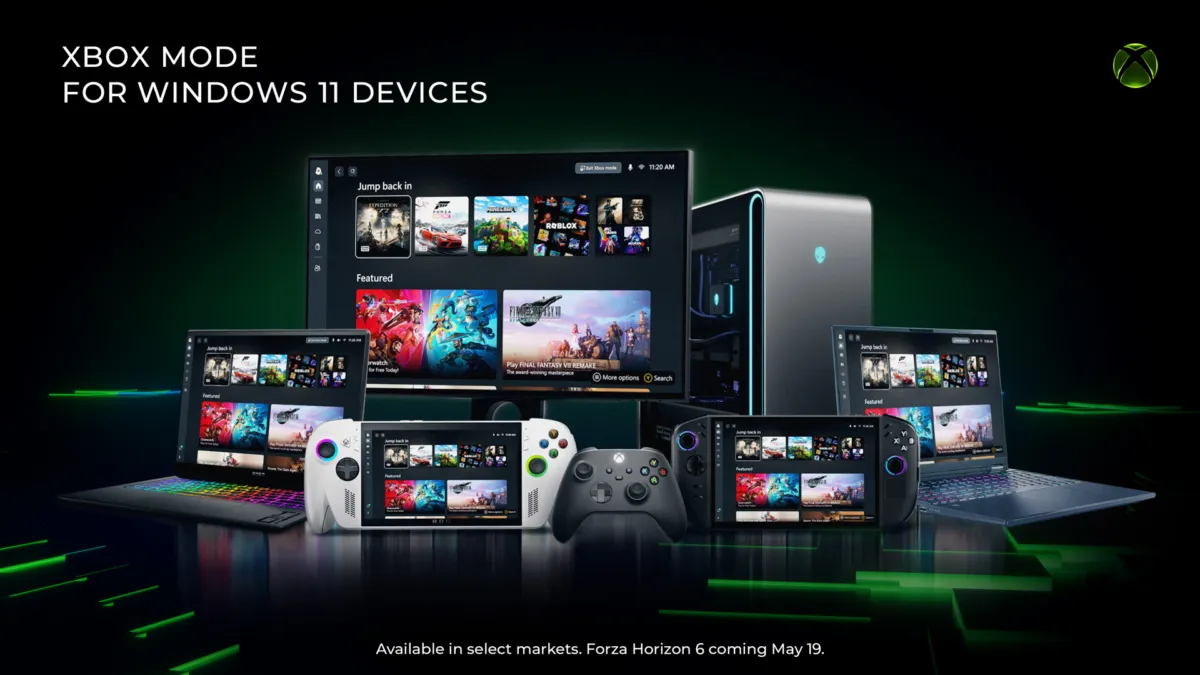
Xbox is not selling Project Helix on 8K. Jason Ronald, Xbox’s vice president of next generation, says the next generation won’t be defined by 8K output or 240Hz refresh rates. In the feature “The soul of Project Helix” in Xbox’s own XBOX – The 25th Anniversary Magazine, by Joe Skrebels and Jeff Rubenstein, he argues it will be defined by deeper immersion and new kinds of games, delivered through neural rendering instead of raw horsepower.
Project Helix is Microsoft’s codename for its next Xbox, built on a custom AMD chip with machine learning integrated into its graphics pipeline, according to Microsoft.
The reason is money. Consoles have long been the cheapest way into high-end gaming, and component costs are now rising sharply. The Helix team says in the magazine that it didn’t see that coming when the project started, and that it has become one of the biggest forces on the design.
What neural rendering means
Neural rendering is a graphics technique that uses machine learning to produce part of the image instead of calculating every pixel the slow way. A game renders fewer pixels or fewer frames, and a trained model fills in the rest. Done well, the result looks close to a full-cost image for a fraction of the work.
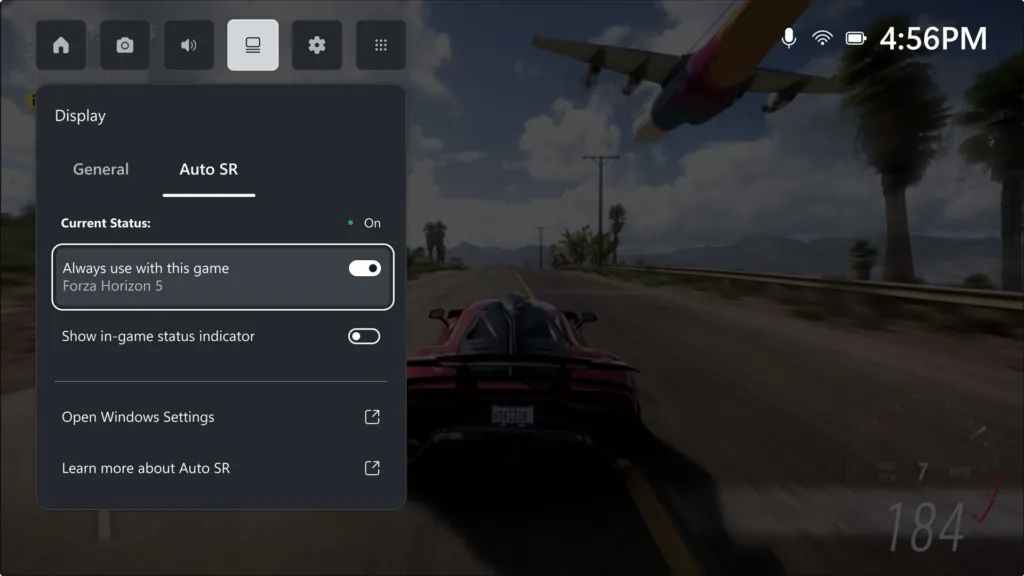
You have already seen early versions. Upscalers like AMD’s FSR 4 render a game below your TV’s resolution and reconstruct the detail. Frame generation creates in-between frames to raise smoothness. Helix bets that the next steps in this direction can carry a whole console generation.
The hardware Xbox has confirmed
Microsoft laid out the plan in Ronald’s GDC keynote summary on Xbox Wire on March 11:
| Piece | What it does |
|---|---|
| Custom AMD system-on-chip | Co-designed for the next generation of DirectX and FSR |
| Ray tracing | “An order of magnitude leap” in performance and capability |
| Machine learning in the pipeline | Xbox says “intelligence” is integrated into the graphics and compute pipeline |
| FSR Next | Named by Xbox as the next version of AMD FSR; no details yet |
At the same show, Ronald also talked about storage. According to GamingBolt’s report from GDC, Helix uses the latest neural texture compression techniques and leans “very heavily” on Zstandard, a compression format the newest version of DirectStorage supports, to stream assets straight off the SSD.
Why this beats a bigger chip
Each of those pieces attacks a cost:
- Upscaling and frame generation save GPU work, so a smaller chip can drive a 4K TV.
- Neural texture compression shrinks textures, so games need less memory. Memory is one of the parts whose price has jumped.
- Zstandard and DirectStorage pack data tighter on the SSD and decompress it fast, so less storage goes further.
Ronald frames the cost squeeze as the hardest and most exciting part of the job. To keep pushing visuals forward while staying affordable, Xbox has to find new ways to make frames that don’t lean on more compute, memory or other expensive parts. He predicts more innovation in the next three to five years than in the previous ten.
Some of AMD’s upscaling work is reaching current hardware first. Its FSR 4.1 upscaler is headed to Xbox Series X|S and the Xbox Ally, with no date yet.
Reality check on price
None of this has a price attached. Microsoft hasn’t announced one. A Fortune report said Helix had been internally projected at $1,200 to $1,800 unless Microsoft subsidizes it, which we covered in Project Helix Price Reportedly $1,200-$1,800. A separate leak claims RDNA 5 graphics and a 110 TOPS neural processor, detailed in our breakdown of the rumored specs. Then-Xbox president Sarah Bond called the next console “very premium” back in October 2025.
So there is a tension in the pitch. Neural rendering is meant to keep costs down, yet every report so far points to an expensive machine. Treat any number as speculation until Microsoft announces one.
What to watch
Three things will show whether the bet pays off:
- Image quality in motion. Upscalers and frame generation can smear fast scenes or add input lag. Helix needs to hide both on a TV at couch distance.
- Developer adoption. Alpha kits reach studios in 2027. Neural texture compression only saves memory if games ship with it.
- The entry price. If the cheapest Helix in the “family of devices” costs far more than a Series X, smarter pixels won’t be enough of a selling point.
Helix’s bet for the whole industry
If neural rendering delivers, Helix could set the template for the whole industry: next-gen image quality without next-gen price shock. If it doesn’t, Xbox will be selling a premium machine on promises. Either way, the spec-sheet war is changing, and Microsoft wants to change it first.
For everything confirmed so far, see every detail Xbox has confirmed about Project Helix.
Edited by Kerwin Stewart, Editor-in-Chief · How we report


Comments
Join the discussion Would you take AI-upscaled 4K on Helix over a pricier console that renders it natively?
Loading comments…