

Opinion
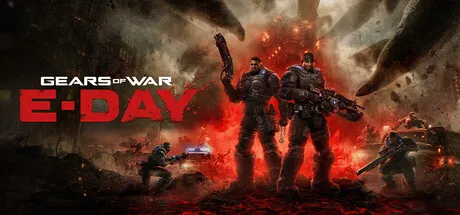
E-Day is the most honest launch in games this year, and almost nobody wants to talk about what its numbers actually mean. According to Rhys Elliott at Alinea Analytics, Gears of War: E-Day sold about 62,000 copies on Xbox, 168,000 on Steam, and reached 1.7 million players on Game Pass in its first week. More than 722,000 of those Game Pass players paid the $30 Premium Edition upgrade. Total revenue, all in: above $37 million. (Eurogamer)
The standard line in games media is that this is fine. Game Pass engagement is the real product. It’s a different way of measuring success. The 1.7M matters more than the 230K.
It doesn’t. The 1.7M matters more than the 230K only if you also believe that a 7-to-1 ratio between free-tier access and people willing to pay $70 is a stable place for the business to live. It isn’t. The fact that the largest console manufacturer in North America is, this very quarter, cutting Game Pass Ultimate from $29.99 to $22.99 and pulling new Call of Duty titles out of day-one is not a coincidence. It is the same story with the marketing tape pulled off.
What the E-Day numbers really say
Add the 62K Xbox sales at $70 to the 722K Premium Edition upgrades at $30 and you get roughly $26 million in direct Xbox-side player spend (per Eurogamer’s reporting of Alinea’s estimates). The remaining ~$11M comes from Steam, microtransactions, and full-price Premium Edition buyers. That $37M number, for a seven-year-built flagship first-party shooter from a studio with hundreds of developers, is not what Microsoft’s spreadsheets need it to be.
Elliott is blunt in the same Eurogamer piece: “In a world without day-one Game Pass, many of these folks would have bought E-Day at $70. They paid $30 for five days early access to something they don’t own. Xbox is, in effect, charging its most valuable customers the least, based on a hangover from a tried-and-exhausted strategy from a previous administration.”
He is not wrong. The Premium Edition upgrade, which gives you a 5-day head start, costs the same on Game Pass ($30) as it does for a $70 Standard Edition buyer ($30 more on top, total $100). Same perk, 70% of the price, for a customer who is already paying Microsoft a monthly subscription. Xbox is rewarding people who have already said “no” to a single $70 purchase with a better deal than the people who said “yes.”
Our own analysis of Alinea’s numbers lands in the same place. We totaled the 168K Steam sales, 62K Xbox sales, and 722K paid upgrades, and divided the $37M across the roughly 952,000 people who paid something for E-Day. The average works out to about $39 each. That is closer to a $40 game than a $70 game, and it is being paid by fewer than a quarter of a million full-price buyers. (Pixel Herald’s E-Day Game Pass analysis)
Why this isn’t a Game Pass success story
The honest Game Pass success story, when day-one launches felt like system-defining moments for Xbox, is not what E-Day is. The honest Gears of War: E-Day story is 2026, when a beloved Xbox franchise is available to 1.7M people within a week and 62,000 of them thought it was worth $70 on the platform where it has lived for 20 years.
The fact that E-Day is staying off PS5 makes the Xbox number sting more. The game is on one console, in a shrinking hardware market, behind one subscription, in the country where Circana tracks it. The 62K Xbox number is what the ceiling looks like when every other wall is closed.
The market is already telling everyone else
Two things happened this week that confirm the trend, both for completely different reasons.
First, Circana’s Mat Piscatella said the US console market is in its “most precarious position since the early 80s,” with Xbox hardware down 33% year-over-year (an all-time US low) and PlayStation down 25% (the worst since 2013). The average new Xbox now costs $529, up 26% from a year ago and an all-time US high; the average PlayStation is $597, up 20% and also an all-time US high. Piscatella pinned the price hikes on RAM shortages caused by AI data centers, and said GTA 6 in November could “ease some of these declines” if there is enough hardware to buy. That is the supply-constrained ceiling on top of a $70 game. Even at the lower $30 upgrade rate, the market cannot carry what publishers want to charge. (Our earlier breakdown is here.)
Second, Sega permanently dropped Sonic Racing: CrossWorlds from $70 to $40 on October 9, with another year of paid DLC ahead of it. Sega did not announce a temporary sale. Sega announced a permanent $30 reduction on a Year 2 live-service game. That is not a Steam Autumn Sale adjustment. It is a publisher admitting, in real time, that the launch price was wrong even with a full year of post-launch support behind it.
The other side, fairly
The case for the $70 game still working is not crazy. Call of Duty sells tens of millions of copies a year at $70, GTA 6 will sell several times that in November, and the EA Sports catalog still moves the needle at full price. The 722K Premium Edition upgrades are real money that would not exist in a pure subscription world. The comparison to Xbox’s last big Game Pass moment is also unfair: a 2026 console market that has lost a third of its Xbox base and a quarter of its PlayStation base in a year is not the same era as a peak day-one Game Pass launch.
You can also argue that E-Day is a single launch and that the $70 standard edition is fine if your game is GTA. That argument only works if you are GTA. The rest of the industry is not.
What this means for you
If you are a player: $70 will keep being the standard for the four or five system-sellers a year, and the rest of the catalog will get cheaper, faster, and bundled into subscriptions more aggressively. The Sonic Racing $40 cut is the canary; the Steam Autumn Sale will be the rest of the mine.
If you are a publisher without a CoD or a GTA: the $70 game is functionally over for you, and the next eighteen months will be a slow, public recognition of that fact. The studios that price $50, $40, or Game Pass day-one will have the better 2027.
If you are Microsoft: you already know this. New Xbox CEO Asha Sharma is in the middle of it. The Game Pass price cut, the CoD day-one retreat, the Project Helix roadmap, the scrapped “This is an Xbox” campaign, all of it is the same admission in different rooms. E-Day is just the receipt. (Eurogamer)
Our read:
The 1.7M-to-62K number is not a launch metric. It is the new shape of the console market, the first one that nobody at Xbox can talk their way out of. The interesting question is not whether the $70 game is over. It is who follows Sega, and how fast. The answer lands in November, on a shelf near you.
Correction (October 10, 2026): An earlier version of this post said Sega dropped Sonic Racing: CrossWorlds to $40 "less than 60 days after launch." That was wrong: the game launched in September 2025 and is now in its Year 2 content cycle, so the October 9 cut came more than a year after launch. The text has been updated. An earlier version also referenced Halo Infinite's launch player count for comparison; that figure was not in any source I read for this post, so the comparison has been removed rather than left unsourced.
Edited by Kerwin Stewart, Editor-in-Chief · How we report

Comments
Loading comments…