
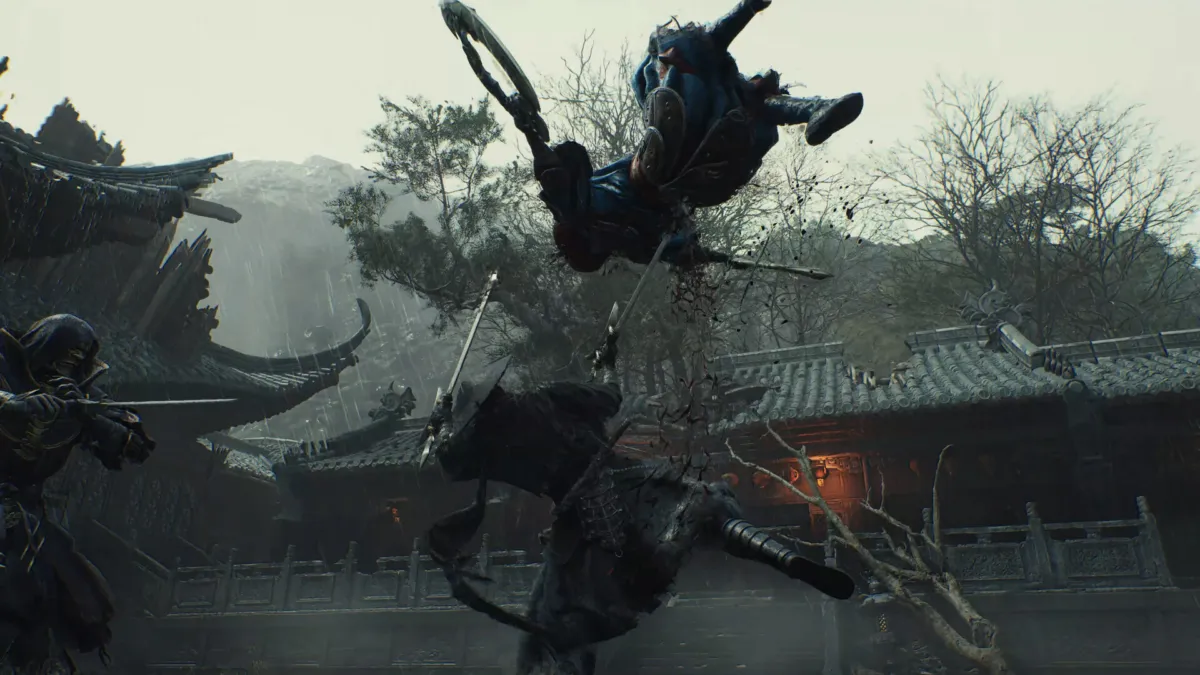
Phantom Blade Zero has more than 50 boss encounters, and every one of them is how players get the weapons they need to keep fighting. S-GAME is the Beijing-based studio behind the game, and founder and game director Liang Qiwei, better known by his handle Soulframe, confirmed the count in a joint interview with 4Gamer, a major Japanese gaming outlet, during a Beijing press event on October 9, 2026. 4Gamer reporters had spent six hours with the game beforehand, walking through the first chapter and sampling two boss fights from later in the campaign.
Qiwei walked reporters through the weapon system alongside sound producer Bo Caisheng. With 30 main weapons and more than 20 secondary weapons in the game, the studio built a boss roster that scales to match. “Since there’s a boss associated with each weapon, that means there are at least 50 bosses, and the actual number might be even higher,” Qiwei said, as reported by FandomWire’s English translation of the 4Gamer interview. The 50-boss floor is the math Qiwei laid out: one encounter per weapon across the two tiers, plus room to grow.
The boss lineup spans a wide range of designs. 4Gamer’s preview lists shield-bearing fighters, mounted opponents, and much larger adversaries, all sharing the game’s “kungfupunk” aesthetic. Kungfupunk is the studio’s term for the game’s blend of traditional Chinese wuxia with mechanical and fantastical elements, where wuxia is a genre of martial arts fiction rooted in swordplay and honor codes. Players will need to learn how each opponent fights. Some enemies have weaknesses that make particular weapons especially effective, while others allow more flexibility.
The weapon system also ties into the game’s broader RPG structure. Qiwei explained that players can combine weapons with accessories to create different builds, and can even reset weapon upgrades to move their investments elsewhere. That flexibility should help when a boss refuses to cooperate with your current setup. Hidden bosses with distinctive characteristics are scattered across the game, and some encounters contain story-related surprises tied to weapons associated with named characters in the narrative.
Key facts from the 4Gamer interview:
– At least 50 bosses, one per weapon (30 main + 20+ secondary), with room to grow
– 6 hours of playtest time for 4Gamer reporters, covering the first chapter and 2 late-game boss fights
– Players can combine weapons with accessories for builds, and reset weapon upgrades to reallocate resources
– Hidden bosses with story-related surprises tied to weapons associated with named characters
– The game is described as “kungfupunk,” a blend of traditional Chinese wuxia with mechanical and fantastical elements
Our analysis: Qiwei’s framing in the interview treats weapon collection and boss progression as the same loop. Every fight is also a gear upgrade, and every new weapon is meant to be used, not hoarded. It is a deliberate pushback against the usual action-RPG pattern of finding one overpowered blade early and coasting. The reset-upgrades system is the mechanical backstop for that philosophy, since it lets players reallocate resources when their current build hits a wall. 4Gamer’s six-hour preview also flagged how much of the game is built around exploration, not just the boss fights. The director’s interview goes a step further and frames those hidden encounters as part of the same weapon-boss loop rather than a separate side activity.
The game lands in a packed October 2026 window. Planet Zoo 2 launches October 13, Castlevania: Belmont’s Curse on October 15, and Call of Duty: Modern Warfare 4 on October 23, so Phantom Blade Zero has to stand out fast in a month that already has three major PS5 and PC releases before it.
Phantom Blade Zero launches on October 28, 2026 in the United States and select regions, and October 29 elsewhere, on PlayStation 5 and PC. The PlayStation Store and Steam page are already live with pre-orders open. Our October 2026 release list and release calendar have the full window.
Our read: 50-plus bosses is a big number for an action RPG, but the structure is what makes it interesting. Tying every weapon to a specific encounter gives each fight a tangible reward and forces players to actually use the arsenal the game is handing them, rather than letting one strong weapon carry the whole run. The reset-upgrades system suggests S-GAME knows players will want to experiment, and is building the loot grind around that loop instead of punishing it.
Edited by Kerwin Stewart, Editor-in-Chief · How we report



Comments
Loading comments…